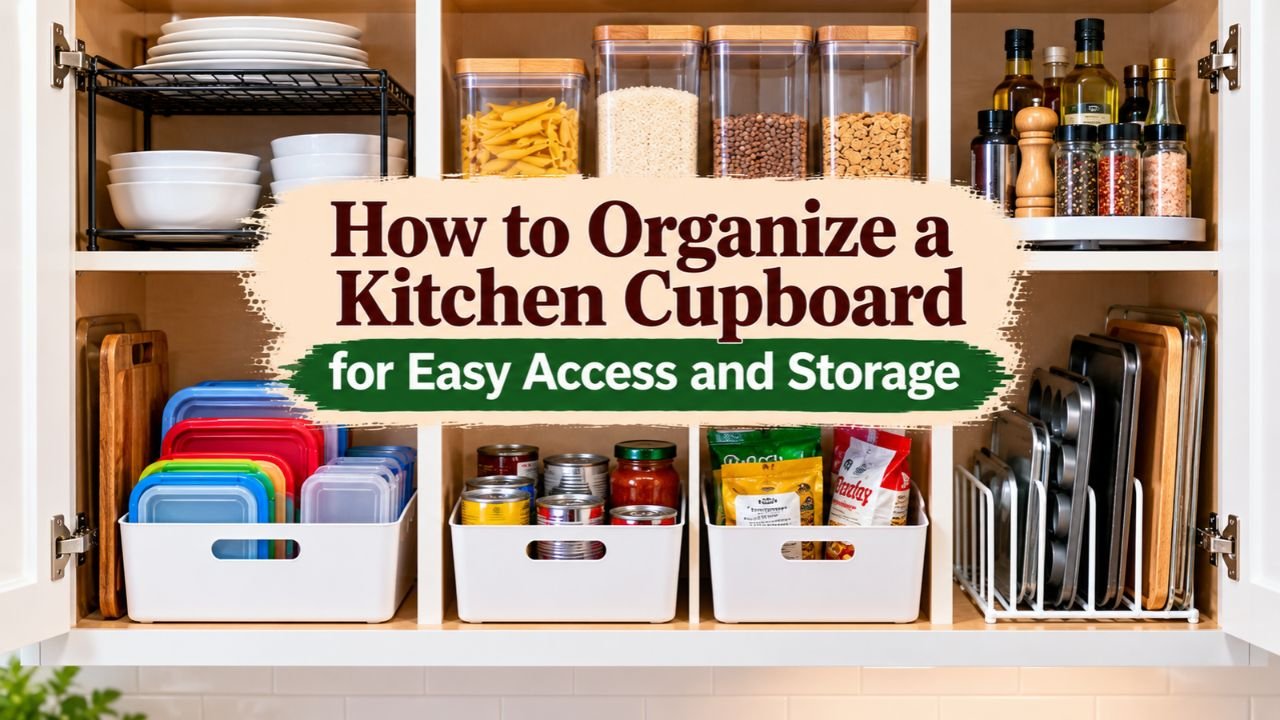
How to Organize a Kitchen Cupboard for Easy Access and Storage
To organize a kitchen cupboard, start by removing everything, sorting items into categories, and assigning each group a practical storage spot. Keep everyday essentials within easy reach, store heavier items on lower shelves, and use simple organizers to make better use of available space.
A cluttered kitchen cupboard can make everyday cooking frustrating. Plates become difficult to reach, food packages disappear behind other items, and valuable shelf space goes unused. Even a large cupboard can feel cramped when items are stacked or arranged without a clear system.
The solution isn’t necessarily buying more storage accessories. It’s understanding how you use your kitchen and arranging each cupboard around those activities. A cupboard near the dishwasher may be ideal for dishes, while one close to the food preparation area may work better for dry ingredients.
Whether you have a small kitchen, deep cabinets, or limited shelf space, a few thoughtful changes can make a noticeable difference. The following steps explain how to arrange kitchen cupboards, choose useful organizers, and maintain a system that works for everyday cooking.
How to Organize a Kitchen Cupboard Step by Step
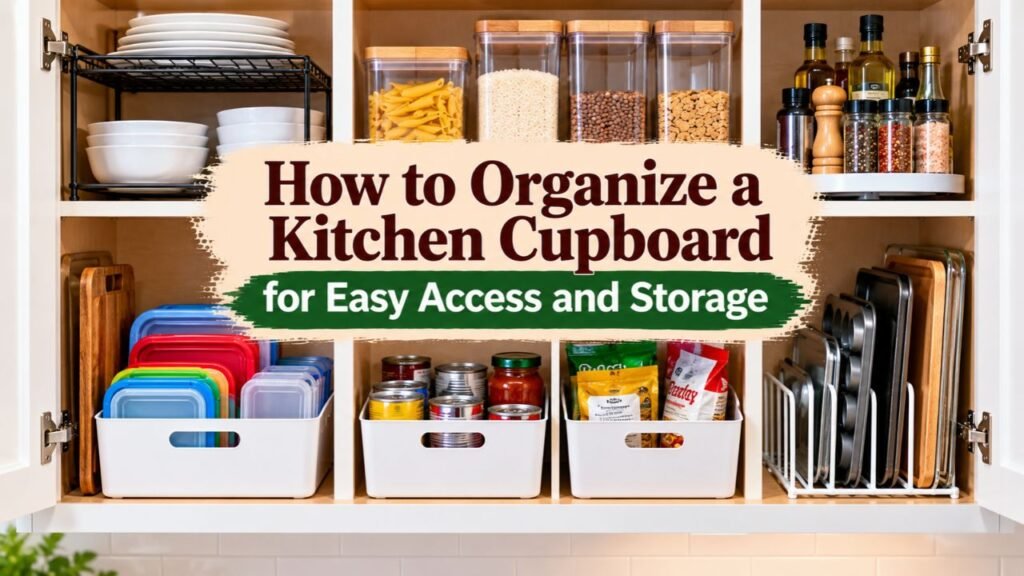
Organizing a kitchen cupboard is easier when you work through a clear process instead of rearranging items randomly. The goal is to create a practical layout where everything has a designated place.
Step 1: Empty the Kitchen Cupboard Completely
Remove everything from the cupboard and place it on a clean countertop or table. Working with an empty cupboard lets you see the actual storage space and identify problems that might otherwise remain hidden.
Take this opportunity to inspect the interior for:
- Crumbs, grease, dust, or sticky residue
- Loose shelf supports or damaged shelving
- Moisture, mold, or signs of water leakage
- Expired food or damaged packaging
- Unused storage accessories taking up space
Wipe the shelves with a suitable mild cleaning solution, following the cabinet manufacturer’s care instructions. Dry all surfaces thoroughly before putting anything back.
If a cupboard has signs of persistent moisture or leaking pipes, address the source before using it for food or other moisture-sensitive items.
Practical Tip: Organize one cupboard at a time. Emptying every kitchen cabinet simultaneously can make the process harder to manage and leave the kitchen unusable.
Step 2: Sort Kitchen Cupboard Items Into Categories
Once everything is out, group similar items together. This makes it easier to understand how much storage each category actually requires.
Common kitchen cupboard categories include:
- Dinnerware: Plates, bowls, and serving dishes
- Drinkware: Glasses, mugs, and travel cups
- Cookware: Pots, pans, and lids
- Food storage: Containers, lids, and reusable bags
- Dry food: Rice, pasta, flour, cereal, and canned goods
- Baking supplies: Mixing bowls, measuring cups, and baking dishes
- Occasional items: Holiday dishes, specialty utensils, and entertaining supplies
Check for duplicates, damaged items, and things you no longer use. Set aside serviceable items for donation and dispose of broken or unsafe items appropriately.
Don’t automatically return everything to the same cupboard. This is the best opportunity to decide whether a different location would be more practical.
Step 3: Assign Each Category a Kitchen Storage Zone
A storage zone is an area dedicated to items used for a particular activity.
For example, keeping plates near the dishwasher makes unloading easier. Storing mixing bowls near the preparation counter reduces unnecessary movement while cooking.
Consider these common kitchen zones:
| Kitchen Area | Suitable Cupboard Contents |
| Near the dishwasher | Everyday plates, bowls, and glasses |
| Near the stove | Pots, pans, and frequently used cooking equipment |
| Near the preparation counter | Mixing bowls, measuring tools, and dry ingredients |
| Near the coffee station | Mugs, coffee filters, and related supplies |
| Upper, less-accessible cupboards | Lightweight, occasionally used items |
| Lower cupboards | Heavy cookware and bulky kitchen equipment |
This is a starting point rather than a fixed rule. Your kitchen layout and daily routine should determine the final arrangement.
Step 4: Measure the Available Cupboard Space
Before purchasing organizers, measure the cupboard’s usable width, depth, and height.
Pay attention to the distance between shelves and any obstructions caused by hinges, shelf supports, or the door frame.
Measure:
- Interior width: The usable horizontal space between the cabinet sides.
- Interior depth: The distance from the back wall to the front opening.
- Shelf clearance: The vertical space available above each shelf.
- Door opening: The space through which organizers and stored items must pass.
An organizer that fits inside the cupboard may still be difficult to insert or remove if the opening is narrow.
Also check whether the shelves are adjustable. Moving an existing shelf can sometimes solve the storage problem without requiring any additional products.
Step 5: Arrange Items According to Frequency of Use
The most useful kitchen cupboard organization principle is to place frequently used items where they are easiest to reach.
Divide your items into three groups:
- Daily use: Everyday dishes, glasses, and regularly used ingredients
- Occasional use: Specialty baking equipment, extra serving bowls, and less-used cookware
- Rare use: Holiday dinnerware, seasonal items, and special entertaining accessories
Keep daily essentials on accessible shelves. Move occasional items to less convenient positions and reserve high or difficult-to-reach areas for lightweight items used infrequently.
Avoid storing heavy objects overhead or placing breakable items where they are difficult to handle securely.
Step 6: Add Organizers Only Where Necessary
After arranging the larger items, identify any remaining storage problems.
If plates occupy only half the shelf height, a shelf riser may help. If small packets keep falling over, a shallow bin can hold them together.
Useful kitchen cupboard accessories include:
- Shelf risers for creating additional storage levels
- Pull-out baskets for deep cupboards
- Vertical racks for baking sheets and cutting boards
- Turntables for suitable small bottles and jars
- Dividers for separating cookware lids
- Clear bins for grouping small food packages
Choose organizers based on the actual problem rather than purchasing a matching collection before measuring.
An organizer should make an item easier to retrieve, not create another layer you must move to reach it.
Step 7: Test Your New Kitchen Cupboard Arrangement
Before considering the job complete, use the cupboard during a few everyday activities.
Try preparing breakfast, unloading the dishwasher, or gathering ingredients for dinner.
Ask yourself:
- Can I reach frequently used items without moving other objects?
- Do stacks remain stable when I remove something?
- Can I see what is stored toward the back?
- Is there enough room to return items after washing?
- Can everyone who uses the kitchen understand the arrangement?
Make small adjustments wherever the layout feels inconvenient. An organized cupboard should be comfortable to use, not simply attractive when its doors are open.
Where to Put Dishes, Cookware, and Food in Kitchen Cupboards
Different kitchen items need different storage arrangements. Choosing the right location and stacking method helps protect belongings while keeping them accessible.
Organize Plates and Bowls in an Easily Accessible Cupboard
Store frequently used plates and bowls on shelves that are comfortable to reach.
If possible, place everyday dinnerware near the dishwasher or dish-drying area. This reduces the distance you need to carry clean dishes.
Group similar pieces together:
- Dinner plates in one stable stack
- Salad plates or side plates in another
- Everyday bowls together
- Serving dishes in a separate location
Avoid stacking incompatible dishes that wobble or require lifting several pieces to reach the one underneath.
Shelf risers can separate plates from bowls when vertical space allows. However, make sure the riser is sturdy enough for the intended load and does not make the upper stack difficult to remove.
For fragile dinnerware, stability matters more than fitting the maximum number of items onto a shelf.
Arrange Cups, Mugs, and Drinking Glasses by Daily Use
Drinking glasses and coffee mugs work best in a cupboard close to where beverages are prepared or served.
Group items by type and size. Keep the cups used most often toward the front, with occasional glassware farther back.
For mugs, consider:
- Grouping similar sizes together
- Using a shelf riser when clearance allows
- Keeping handles positioned for easy retrieval
- Avoiding unstable stacking
An under-shelf mug rack may help in some cupboards, but only if it is securely installed and rated for the weight of the mugs.
Delicate glasses should sit on a stable, clean shelf rather than being tightly packed into spaces where they can easily knock against one another.
Store Pots, Pans, and Lids in Lower Cupboards
Lower kitchen cupboards are generally better suited to heavy cookware.
Keeping heavy pots and pans below countertop height reduces the need to lift them overhead.
Arrange cookware according to size and frequency of use. Place regularly used pans near the front, with larger stockpots or specialty cookware in less accessible areas.
For pot and pan lids, a vertical lid organizer can prevent a scattered pile.
If nesting cookware, use appropriate protective pads between nonstick surfaces to reduce scratching.
Deep lower cupboards may benefit from pull-out shelves or baskets, provided the cabinet structure and hardware can support the intended weight.
Organize Dry Food and Pantry Ingredients Separately
A cupboard used for food should have a clear arrangement that makes ingredients visible and easy to rotate.
Group pantry items into practical categories:
- Rice, pasta, and other grains
- Flour, sugar, and baking ingredients
- Breakfast cereals and oatmeal
- Canned vegetables, beans, and soups
- Cooking oils and shelf-stable condiments
- Snacks and packaged foods
Store dry ingredients according to their package instructions, preferably in a cool, dry location away from excessive heat and moisture.
Use suitable, tightly closing food-storage containers for products that need protection after opening.
The University of Minnesota Extension’s guidance on pantry pests recommends tightly closed glass, metal, or heavy plastic containers to help protect stored foods from insect infestation.
Label transferred foods with their names and relevant dates or storage instructions. Keep allergen and preparation information when needed.
Important: Not every packaged food is safe to keep at room temperature after opening. Follow the storage directions on the label, including any refrigeration requirements.
Best Kitchen Cupboard Organizers for Saving Space
The right organizer makes unused space functional while allowing easy access to stored items.
Different cupboard designs benefit from different accessories.
| Cupboard Organizer | Best Use | Main Advantage |
| Shelf riser | Plates, bowls, and small dishes | Uses available vertical space |
| Pull-out basket | Deep lower cupboards | Makes items at the back easier to reach |
| Turntable | Small jars and suitable bottles | Provides access with less rearranging |
| Vertical divider | Lids, trays, and cutting boards | Keeps flat objects upright |
| Clear storage bin | Snacks and small packages | Groups related items together |
| Under-shelf basket | Lightweight kitchen supplies | Uses otherwise empty shelf space |
Use Shelf Risers to Create Additional Storage Levels
Shelf risers are particularly useful when a cupboard has tall shelves but stores relatively short items.
For example, a riser can create one level for small plates and another for bowls, making both groups accessible.
Choose a sturdy riser with a footprint appropriate for the shelf. Check its stated load capacity, and avoid positioning heavy dishes where removing them becomes awkward.
A riser is less helpful if it leaves too little clearance to lift items safely.
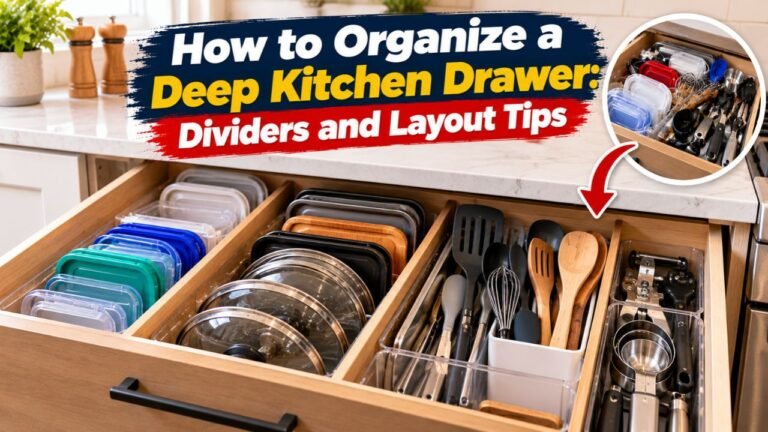
Install Pull-Out Organizers in Deep Kitchen Cupboards
Deep cupboards often create a problem because items at the back become difficult to see and reach.
A pull-out basket or sliding shelf brings stored items toward the cabinet opening.
These organizers work particularly well for:
- Pots and pans
- Food storage containers
- Small kitchen appliances
- Packaged pantry products
- Baking equipment
Check the cupboard’s interior dimensions, hinge clearance, mounting requirements, and weight limits before installation.
For renters, removable bins may be a more practical option than permanently mounted hardware.
Use Vertical Dividers for Flat Kitchen Equipment
Baking sheets, cutting boards, cooling racks, and pan lids often waste space when stored in horizontal piles.
Vertical dividers allow these items to stand upright, making individual pieces easier to remove.
Position the divider securely so taller items cannot tip forward when the cupboard opens.
For wooden cutting boards, make sure the boards are thoroughly dry before storage, and avoid trapping them against damp surfaces.
Add Turntables for Small Pantry Items
A turntable, sometimes called a lazy Susan, can make small bottles, jars, and packaged ingredients easier to access.
It works best when the stored items are stable and there is enough clearance for everything to rotate freely.
Avoid overloading the turntable with tall or heavy containers that might tip.
In a narrow cupboard, a rectangular bin may use the available footprint more efficiently than a round turntable. Choose whichever allows easier access without wasting usable shelf space.
How to Organize Small and Deep Kitchen Cupboards
Kitchen cupboard organization should account for the cupboard’s actual dimensions. A narrow cabinet requires a different approach from a deep base cabinet or a tall overhead unit.
Make a Small Kitchen Cupboard More Functional
In a small cupboard, prioritize the items you use most often instead of trying to store everything in one place.
Keep similar items together and avoid filling every available gap.
Useful techniques include:
- Using adjustable shelf heights where available
- Choosing stackable containers with stable shapes
- Storing flat equipment vertically
- Removing unnecessary packaging when safe and practical
- Moving rarely used items to other storage areas
- Keeping frequently used items visible
Square or rectangular containers can sometimes fit together more efficiently than round containers, depending on the shelf shape.
However, transferring everything into new containers is unnecessary. Original packaging often works perfectly well, especially for products used quickly.
Arrange Deep Cupboards So Items Don’t Get Lost
Deep kitchen cupboards can hold plenty of items, but poorly arranged shelves make the back difficult to access.
Use a front-and-back storage system based on frequency of use.
Place frequently used items toward the front and less-used items behind them.
For smaller products, put related items in removable bins that can slide forward when needed.
If the cupboard contains pantry ingredients, avoid hiding older packages behind newly purchased ones.
Pull-out organizers are helpful when you regularly need access to the full shelf depth.
Organize High Kitchen Cupboards Safely
High cupboards are better suited to lightweight items that are not needed every day.
Suitable contents may include:
- Lightweight serving accessories
- Extra reusable containers
- Seasonal table decorations
- Infrequently used lightweight kitchen supplies
Avoid storing heavy appliances, large cookware, or fragile objects in places that require awkward overhead lifting.
Use a stable step stool when necessary rather than climbing on chairs or countertops.
Keep essential kitchen items within a comfortable reach range, particularly if household members have limited mobility.
How to Keep a Kitchen Cupboard Organized Long-Term
A good organization system should remain useful after the initial cleanup. Simple routines can prevent cupboards from gradually becoming cluttered again.
Give Every Kitchen Item a Permanent Storage Spot
Assign each category a consistent location and return items there after use.
For example, keep everyday bowls on one shelf, mugs in one section, and food containers in a designated area.
This reduces the chance of unrelated items accumulating wherever there happens to be space.
Labels can help when several household members use the kitchen, especially for bins containing baking supplies, snacks, or pantry ingredients.
Rotate Pantry Food Before Adding New Groceries
When putting groceries away, check which products are already in the cupboard.
Move older items toward the front and place newer purchases behind them, while considering package dates and condition.
The University of Minnesota Extension’s recommendations for reducing food waste specifically advise keeping older pantry products in front of newer ones so they are more likely to be used first.
This simple rotation system can help prevent forgotten ingredients from accumulating at the back of the cupboard.
Don’t rely on dates alone to determine food safety. Check storage instructions, package integrity, and any signs of contamination or spoilage.
Clean Cupboard Shelves and Containers Regularly
Small spills and crumbs are easier to remove before they accumulate.
Wipe accessible surfaces when needed, and clean storage containers according to their material and manufacturer instructions.
Periodically check for:
- Open food packages
- Crumbs and spills
- Loose container lids
- Damaged dishes
- Signs of pantry insects
- Items placed in the wrong category
For food cupboards, pay particular attention to corners and shelf joints where crumbs can collect.
If pantry insects appear, inspect stored foods, discard infested products, and thoroughly clean the affected area rather than simply rearranging the packages.
Review the Kitchen Cupboard Layout When Your Needs Change
An organization system may need adjustment as cooking habits and household needs change.
For instance, a family that begins preparing more meals at home may need easier access to mixing bowls, measuring tools, and food containers.
Reassess the cupboard arrangement when items repeatedly end up in the wrong place or become difficult to reach.
You don’t need to reorganize the entire kitchen every month. Small corrections are often enough to maintain a practical setup.
Kitchen Cupboard Organization Mistakes to Avoid
Even an organized-looking cupboard can become inconvenient when the storage layout ignores how items are used.
Overstacking Plates, Bowls, and Containers
Tall stacks may appear space-efficient but can be unstable and difficult to handle.
If removing one item requires lifting a heavy pile, divide the stack into smaller groups or use an appropriate shelf riser.
Don’t stack fragile dishes beyond what can be handled comfortably.
Buying Organizers Before Measuring Cupboards
Storage products can waste space when their dimensions don’t suit the cupboard.
An oversized basket may block the door, while a poorly sized shelf riser may leave too little room to retrieve dishes.
Measure first, identify the storage problem, and purchase only what addresses it.
Mixing Unrelated Items in the Same Storage Bin
A bin containing measuring spoons, snack packages, spare lids, and coffee accessories may look tidy from the outside, but it becomes difficult to locate specific items.
Group products according to a clear purpose.
If a container becomes a place for miscellaneous objects, reconsider whether those objects belong in the same cupboard.
Storing Cleaning Chemicals With Food or Dishes
Cleaning chemicals should be stored separately from food and food-contact items to reduce the risk of contamination.
Follow product labels, keep chemicals in their original containers, and secure hazardous products away from children and pets.
A cupboard under the kitchen sink is often unsuitable for storing food because of nearby plumbing, possible leaks, and cleaning products.
Filling Every Inch of Available Shelf Space
A completely packed cupboard may hold more items, but retrieving them becomes harder.
Leave enough room to lift plates, remove containers, and return items without disturbing neighboring objects.
The most efficient layout isn’t necessarily the one that stores the greatest number of things. It’s the one that makes everyday items easy to use.
Conclusion
Understanding how to organize a kitchen cupboard starts with choosing practical locations for the items you use most often. Empty the space, group similar belongings, measure the shelves, and arrange everything according to its size, weight, and frequency of use.
Keep daily dishes accessible, store heavy cookware in lower cupboards, and use appropriate containers for pantry ingredients. Shelf risers, pull-out baskets, and dividers can improve storage when selected for a specific purpose.
The best organization system is simple enough to maintain. Give each item a designated place, avoid overcrowding, and adjust the arrangement when your kitchen routine changes. A cupboard that works well during daily cooking is more useful than one that looks perfectly arranged but is difficult to use.
FAQs About How to Organize a Kitchen Cupboard
What Is the Best Way to Organize Kitchen Cupboards?
The best approach is to group similar items and store them near where they are used. Keep everyday dishes within comfortable reach, place heavy cookware on lower shelves, and reserve less accessible areas for lightweight, occasional-use items.
What Should Go on the Top Shelf of a Kitchen Cupboard?
Top shelves are best for lightweight items that aren’t used frequently, such as seasonal accessories, spare containers, and occasional serving supplies. Avoid storing heavy cookware or fragile objects that would be difficult to retrieve safely.
How Can I Organize Kitchen Cupboards Without Buying Organizers?
Start by removing unnecessary items, grouping similar products, and adjusting existing shelves if possible. Rearranging dishes, nesting compatible containers, and moving seldom-used equipment elsewhere can create usable space without purchasing accessories.
Should Kitchen Cupboards Be Organized by Item Type or Frequency of Use?
Use both methods together. Group similar items into categories, then position each category according to how frequently it’s needed. For example, everyday plates should be easier to reach than holiday serving dishes.
How Do I Organize a Kitchen Cupboard With No Adjustable Shelves?
Use appropriately sized shelf risers, removable bins, and vertical dividers to create more functional storage areas. Measure the space carefully and make sure accessories leave enough clearance for removing and replacing items.
Can I Store Dishes and Dry Food in the Same Cupboard?
Yes, provided the cupboard is clean, dry, and suitable for food storage. Keep food securely packaged and arrange it separately from dishes so spills and crumbs don’t contaminate clean dinnerware. Avoid overcrowding or placing heavy food containers above fragile dishes.