How to Keep a Kitchen Clean and Organized: Daily Habits That Work
The easiest way to keep a kitchen clean and organized is to combine a short daily cleaning routine with storage that puts every item close to where it is used. Clear the counters after cooking, wash dishes promptly, wipe food-contact surfaces, and return supplies to their assigned places. A consistent system prevents clutter and grime from building up.
Kitchen cleanliness is also a food-safety issue. FoodSafety.gov estimates that about one in six Americans becomes sick from foodborne illness each year, reinforcing why clean hands, separate cutting boards, and safe food storage matter alongside tidy cabinets.
A spotless-looking kitchen can still have contaminated surfaces, while an organized-looking pantry may hide expired food or awkward storage. Good kitchen upkeep needs both hygiene and practical placement, without requiring expensive organizers or hours of scrubbing.
In this article, I cover a step-by-step kitchen reset, daily and weekly cleaning schedules, countertop and cabinet organization, pantry and refrigerator storage, and food-safe cleaning methods. You’ll also learn how to maintain a small kitchen, handle common trouble spots, and keep everything manageable with simple habits.
How to Keep a Kitchen Clean and Organized Every Day
The most reliable way to maintain a clean kitchen is to handle small tasks before they become large cleaning projects.
A few consistent habits can prevent overflowing sinks, crowded counters, unpleasant odors, and misplaced kitchen tools.
1. Clean as You Cook
Cleaning while cooking reduces the amount of work remaining after a meal.
Instead of leaving every used utensil, ingredient, and container on the counter, return items to their proper places as soon as you’re finished using them.
Try these habits:
- Put ingredients back in the pantry or refrigerator after measuring them.
- Wash or load used utensils during cooking downtime.
- Wipe spills before they dry.
- Place food scraps in a designated waste container.
- Keep unnecessary packaging off the countertop.
- Return clean cutting boards and tools to their storage locations.
For example, while vegetables are roasting, you can wash the cutting board and put away unused ingredients.
This approach keeps your preparation area usable throughout the cooking process.
However, always prioritize food safety. Do not let raw meat juices contaminate clean dishes, towels, or other food preparation surfaces.
2. Keep the Sink Clear of Dirty Dishes
A sink filled with dishes can make the entire kitchen feel cluttered.
It also limits the space available for washing produce, cleaning cookware, and performing other kitchen tasks.
After each meal:
- Remove leftover food from plates.
- Load dishwasher-safe items into the dishwasher.
- Hand-wash items that require special care.
- Rinse and clean the sink.
- Allow dishes and utensils to dry appropriately.
- Put everything away when dry.
If you don’t have a dishwasher, use a compact dish rack and empty it regularly.
Avoid stacking dirty dishes for extended periods.
A clear sink makes the next cooking session easier.
3. Wipe Countertops After Food Preparation
Countertops collect crumbs, grease, food particles, and spills.
Clean them after preparing food rather than waiting until the end of the day.
Use a cleaning method appropriate for the countertop material.
For example, a mild dish soap solution is suitable for many sealed surfaces, but natural stone, butcher block, laminate, and specialty finishes may require different care.
Always clean food-contact surfaces after handling raw meat, poultry, seafood, or eggs.
Sanitize surfaces when appropriate, using products approved for the surface and following the label directions.
4. End the Day With a 10-Minute Kitchen Reset
A short evening reset can prevent clutter from carrying over into the following day.
Focus on the areas you will need first the next morning.
A practical routine includes:
- Put away food and leftovers.
- Finish the dishes.
- Wipe the countertops and dining surface.
- Clean the sink.
- Put cooking tools back in their assigned locations.
- Empty the trash if necessary.
- Sweep visible crumbs from the floor.
The routine may take longer after a complicated meal, but consistency matters more than completing it within an exact number of minutes.
Key Takeaway: Cleaning as you cook, keeping dishes under control, and resetting the kitchen each evening prevents small messes from becoming overwhelming.
Start With a Complete Kitchen Decluttering Session
Daily cleaning becomes easier when the kitchen contains fewer unnecessary items.
Before buying organizers or changing cabinet layouts, examine what you already own.
An organized kitchen should support the way you cook rather than simply display matching containers.
Remove Everything From One Area at a Time
Begin with a single drawer, cabinet, or pantry shelf.
Take out the contents and group similar items together.
For example:
- Cooking utensils
- Knives and cutting tools
- Pots and pans
- Baking supplies
- Food storage containers
- Small appliances
- Cleaning products
- Pantry foods
Avoid emptying every cabinet simultaneously if you cannot finish the project in one session.
Working in manageable sections prevents the kitchen from becoming unusable during the organization process.
Decide What to Keep, Donate, or Discard
Examine each item and consider how often you use it.
Keep items that are functional, safe, and useful for your household.
Donate usable duplicates or equipment you no longer need.
Discard items that are damaged, contaminated, or unsafe.
Common clutter includes:
- Duplicate spatulas and serving spoons
- Containers without matching lids
- Broken appliances
- Damaged nonstick cookware
- Excess promotional mugs
- Expired pantry products
- Unused kitchen gadgets
- Cracked or badly worn cutting boards
Do not donate damaged electrical appliances or unsafe kitchen equipment.
For food, distinguish quality dates from food safety concerns rather than automatically assuming every product becomes unsafe immediately after its printed date.
Give Every Item a Designated Storage Location
After sorting, assign each item a permanent home.
Store everyday dishes near the dishwasher or drying area.
Keep frequently used cookware close to the stove.
Place baking tools together instead of distributing them across several cabinets.
Return less frequently used appliances to accessible but less prominent storage locations.
This reduces the amount of time spent searching for items during cooking.
Key Takeaway: Decluttering should happen before organizing. Removing unused items creates space and makes it easier to establish practical storage locations.
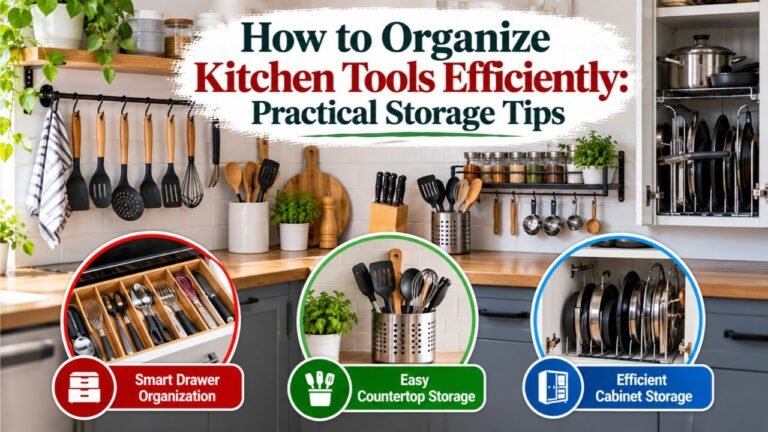
How to Organize Kitchen Countertops and Keep Them Clear
Kitchen countertops are valuable preparation surfaces.
When appliances, containers, paperwork, and decorative items cover them, even a large kitchen can feel cramped.
The goal is not to leave every surface completely empty.
Instead, keep enough clear space for food preparation and daily tasks.
Keep Only Frequently Used Appliances on the Counter
Start by identifying the appliances you use regularly.
Examples may include:
- Coffee maker
- Electric kettle
- Toaster
- Frequently used blender
An appliance used once a month probably doesn’t need permanent countertop space.
Store occasional-use equipment in a cabinet, pantry, or appliance garage when available.
Avoid placing electrical appliances where they may be exposed to sink splashes or stove heat.
Create Dedicated Kitchen Work Zones
Organizing countertops by activity helps prevent unnecessary movement.
A simple kitchen can have the following zones:
| Kitchen Zone | Items to Keep Nearby |
| Food preparation | Cutting boards, knives, mixing bowls |
| Cooking | Pots, pans, spatulas, cooking utensils |
| Dishwashing | Dish soap, brushes, dish rack |
| Beverage station | Coffee maker, mugs, tea supplies |
| Food serving | Plates, serving utensils, trays |
| Storage and packing | Food containers, reusable bags |
These zones don’t require a large kitchen.
A single counter may support multiple activities at different times.
The important part is keeping related supplies together.
Use Trays and Small Organizers
A small tray can group frequently used items without allowing them to spread across the countertop.
For example, a tray beside the stove might hold a suitable oil dispenser and a few commonly used seasonings.
Keep these items away from excessive heat and follow storage requirements.
Avoid using too many baskets, racks, or decorative holders.
Organizers should create usable space rather than fill it.
Keep Paperwork and Unrelated Items Out of the Kitchen
Mail, receipts, keys, and school supplies often accumulate on kitchen counters.
Create a separate landing area for these items when possible.
A small drawer, wall organizer, or entryway shelf can prevent kitchen surfaces from becoming temporary storage for unrelated belongings.
Key Takeaway: Keep countertop storage limited to frequently used items, organize by activity, and protect enough clear space for safe food preparation.
How to Organize Kitchen Cabinets and Drawers
Cabinets and drawers should make kitchen tools easy to find and return.
The best layout depends on the kitchen’s shape, storage capacity, and everyday cooking habits.
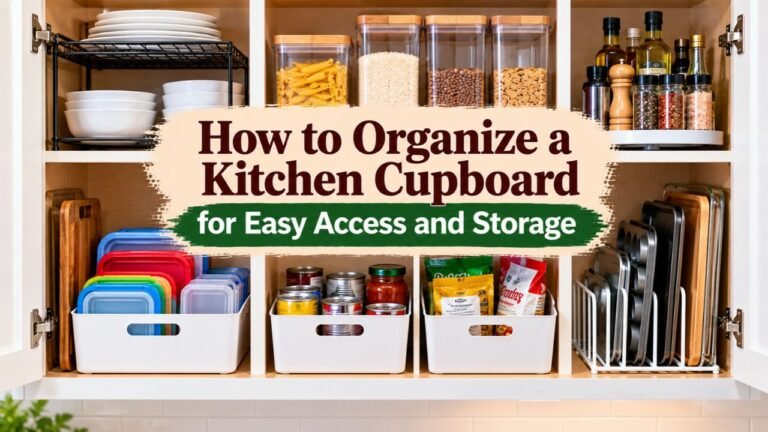
Organize Cabinets by Frequency of Use
Store everyday items in the easiest-to-reach locations.
For example:
- Everyday plates and bowls: Accessible upper or lower cabinets
- Drinking glasses: Near the water or beverage station
- Pots and pans: Near the stove
- Baking dishes: Near the oven or baking supplies
- Special-occasion dishes: Higher or less frequently accessed shelves
Avoid putting heavy cookware on high shelves where lifting may be difficult or unsafe.
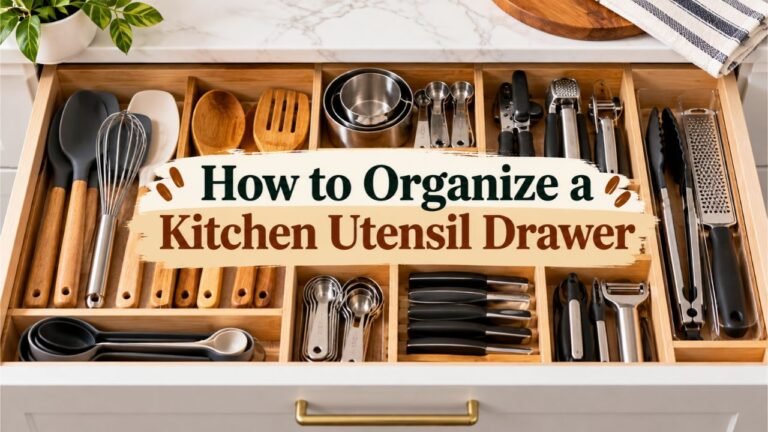
Use Dividers to Organize Kitchen Drawers
Kitchen drawers often become cluttered because small items move around.
Drawer dividers can separate:
- Forks, spoons, and table knives
- Measuring spoons and cups
- Spatulas and cooking utensils
- Small baking tools
- Reusable food storage accessories
Adjustable dividers are useful when drawer dimensions don’t match standard organizer sizes.
Measure the inside of your drawers before purchasing organizers.
Store Pots, Pans, and Lids Together
Stacking cookware can save space, but tall stacks can make individual pans difficult to retrieve.
Depending on the cabinet, consider:
- Vertical pan organizers
- Lid racks
- Pull-out shelves
- Divided deep drawers
- Protective separators for delicate cookware
Keep heavier pots on lower shelves.
Avoid unstable stacks that can fall when removing one item.
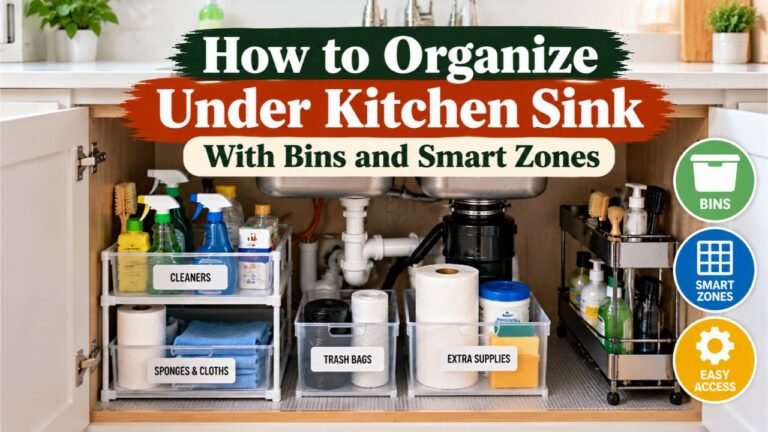
Organize the Cabinet Under the Kitchen Sink
The space beneath the sink is often awkward because plumbing reduces usable storage.
Use it for suitable cleaning supplies and related equipment.
A practical arrangement may include:
- A small caddy for everyday cleaners
- Separate containers for cleaning brushes
- A designated storage location for trash bags
- Space around pipes for leak inspection
Do not store unpackaged food beneath the sink.
Keep cleaning chemicals in their original labeled containers and out of children’s reach.
Avoid placing incompatible chemicals together where a leak could cause them to mix.
Key Takeaway: Cabinet organization works best when everyday tools are easy to reach, heavy items are stored safely, and each drawer has a clear purpose.
How to Keep the Kitchen Pantry Organized
A well-organized pantry makes meal planning easier and reduces unnecessary food purchases.
It should also help you identify older products before buying duplicates.
Group Similar Pantry Foods Together
Organize shelves by food category.
Common groups include:
- Rice, pasta, and grains
- Canned vegetables and beans
- Baking ingredients
- Breakfast foods
- Snacks
- Condiments and sauces
- Tea and coffee
- Extra packaged supplies
Use shelf labels or baskets when they help maintain these categories.
Avoid creating so many narrow categories that everyday items become difficult to return.
Use Clear Containers When They Provide a Benefit
Airtight containers can help protect suitable dry foods from moisture and pests.
They may also make quantities easier to see.
However, moving every packaged food into a matching container is unnecessary.
For products with important cooking instructions, allergy information, lot numbers, or expiration details, preserve that information.
When transferring food, label the container with the contents and any relevant date or preparation information.
Put Older Food in Front
Use a practical first-in, first-out approach.
When adding new groceries, place older suitable products where they’ll be used first.
Check dates and packaging condition periodically.
This reduces the chance of forgetting food at the back of a shelf.
However, food quality dates and safety-related storage instructions are not interchangeable.
Follow product-specific guidance and discard items showing contamination, pest activity, or other signs of spoilage.
Prevent Pantry Pests
Keep dry food packaging closed.
Inspect flour, grains, cereals, and other vulnerable foods for pest activity.
Clean crumbs and spilled ingredients from shelves.
Avoid storing food directly on damp floors.
If pests appear, identify the affected products, remove contaminated food, and thoroughly clean the storage area.
Key Takeaway: Group pantry foods by category, preserve important labels, rotate stock, and inspect shelves regularly for spills or pests.
How to Organize and Clean the Refrigerator and Freezer
Refrigerator organization is about both convenience and food safety.
An orderly refrigerator helps you identify leftovers, reduce waste, and prevent raw foods from contaminating ready-to-eat items.
Store Food in the Right Locations
Use covered containers to prevent leaks and unwanted contact between foods.
Keep raw meat, poultry, and seafood securely wrapped or contained on a low shelf where juices cannot drip onto ready-to-eat food.
Store cooked meals and ready-to-eat items separately.
Avoid placing raw poultry above produce or prepared foods.
Maintain Safe Refrigerator Temperatures
Keep the refrigerator at 40°F (4°C) or below and the freezer at 0°F (-18°C) or below.
Use appliance thermometers if the built-in temperature display is unavailable or unreliable.
Do not overload shelves to the point that cold air cannot circulate properly.
Perishable foods generally should not remain at room temperature for more than two hours, or one hour when the surrounding temperature exceeds 90°F.
Label Leftovers and Meal Prep Containers
Label prepared foods with their contents and preparation date.
Use clean, covered containers.
Keep recently prepared foods visible instead of hiding them behind older containers.
As a general food-safety guideline, many cooked leftovers should be refrigerated for no more than 3–4 days.
Use appropriate product-specific guidance for foods with different storage requirements.
Clean Refrigerator Shelves and Drawers
Wipe spills promptly.
Periodically remove shelves and drawers according to the appliance manufacturer’s instructions.
Wash removable components with suitable cleaning products and allow them to dry before reinstalling.
Avoid exposing cold glass shelves to sudden temperature changes that could cause breakage.
Check refrigerator door seals for dirt, damage, or poor contact.
Key Takeaway: Keep raw foods separated, maintain safe temperatures, label leftovers, and avoid overcrowding refrigerator shelves.
How to Clean Kitchen Surfaces and Appliances Properly
A clean-looking surface is not necessarily free from harmful microorganisms.
Kitchen hygiene requires understanding the difference between ordinary cleaning and sanitizing.
Understand Cleaning vs. Sanitizing
Cleaning removes visible dirt, food residue, grease, and some germs using water, detergent, and physical action.
Sanitizing reduces microorganisms on a previously cleaned surface to an appropriate level.
The CDC’s guidance on cleaning and disinfecting the home explains that kitchen food-contact surfaces should first be cleaned, with additional sanitizing appropriate after contamination from raw meat, poultry, or their juices.
Follow the sanitizer manufacturer’s directions concerning dilution, required contact time, suitable surfaces, and rinsing.
Do not mix bleach with vinegar, ammonia, or other household cleaning chemicals.
Routine household disinfecting is not necessary for every surface every day when ordinary cleaning is sufficient, although additional precautions may be appropriate when someone is sick.
Clean the Stovetop After Cooking
Grease and food spills become harder to remove when repeatedly heated.
Allow the stovetop to cool before cleaning unless the manufacturer’s instructions specify otherwise.
For everyday maintenance:
- Remove loose crumbs and food particles.
- Apply a cleaner suitable for the surface.
- Wipe away grease and residue.
- Clean around burners or heating elements carefully.
- Dry the surface where appropriate.
Gas stovetops, glass-ceramic cooktops, and induction surfaces may require different products.
Avoid abrasive tools that could scratch delicate finishes.
Keep the Microwave Clean
Microwaves collect food splatters and spills.
Wipe the interior regularly with a damp cloth and suitable mild cleaning solution.
For dried food residue, follow the appliance manufacturer’s recommended loosening and cleaning procedure.
Remove and wash the turntable if the design allows it.
Dry the interior before closing the door.
Avoid spraying large amounts of cleaner into ventilation openings, control panels, or electrical components.
Clean the Sink and Faucet
The sink can collect food particles, grease, and microorganisms.
After food preparation:
- Remove food debris.
- Wash the basin with a suitable cleaner.
- Clean around the faucet and handles.
- Rinse away cleaning residue.
- Dry surfaces if mineral deposits or water spots are a problem.
If the sink has been contaminated with raw meat juices, clean and sanitize it using an appropriate food-contact-surface product.
For garbage disposals, follow the manufacturer’s maintenance instructions.
Do not put hands into a disposal chamber without first following proper power-isolation safety procedures.
Maintain the Dishwasher
A dishwasher needs occasional maintenance despite its regular exposure to water and detergent.
Check the manufacturer’s instructions for:
- Filter cleaning
- Spray-arm inspection
- Door-gasket cleaning
- Approved dishwasher cleaners
- Maintenance cycles
Remove food particles from the filter when needed.
A dishwasher that smells unpleasant or leaves residue on dishes may need cleaning or servicing.
Inspect Cutting Boards and Dishcloths
Cutting boards develop scratches and grooves over time.
Replace boards that become excessively worn or difficult to clean.
Use separate boards or thoroughly clean and sanitize equipment between raw animal foods and ready-to-eat foods.
Wash kitchen towels frequently.
Allow dishcloths and brushes to dry between uses and replace them when worn or unsanitary.
Key Takeaway: Clean kitchen surfaces first, sanitize when needed, and follow the material and cleaning-product manufacturer’s instructions.
Create a Daily, Weekly, and Monthly Kitchen Cleaning Schedule
A cleaning schedule distributes tasks across manageable periods.
Daily work should focus on food safety and immediate messes.
Weekly and monthly cleaning can address areas that accumulate dust, grease, and hidden residue.
Daily Kitchen Cleaning Checklist
| Task | Frequency |
| Wash dishes or load dishwasher | After meals |
| Wipe food preparation surfaces | After use |
| Clean spills and visible grease | Immediately or after cooking |
| Clean sink and faucet | Daily or as needed |
| Put ingredients and utensils away | After use |
| Sweep visible crumbs | Daily or as needed |
| Check food storage and leftovers | Daily |
| Empty trash | When needed |
These tasks form the foundation of a manageable routine.
Weekly Kitchen Cleaning Checklist
Schedule the following tasks according to how heavily the kitchen is used:
- Mop the kitchen floor.
- Clean cabinet handles and frequently touched surfaces.
- Wipe appliance exteriors.
- Review refrigerator contents.
- Clean the microwave.
- Inspect pantry shelves for crumbs and spills.
- Wash or replace cleaning cloths and sponges as appropriate.
- Clean trash and recycling containers.
- Inspect the area beneath the sink for leaks.
A busy household may need some tasks more frequently.
Monthly Kitchen Cleaning Checklist
Monthly maintenance can include:
- Clean the range hood grease filter according to its instructions.
- Wipe accessible cabinet fronts and backsplash surfaces.
- Inspect and clean the dishwasher filter.
- Check refrigerator seals and accessible vents.
- Review pantry stock and expired or deteriorated foods.
- Clean hard-to-reach corners.
- Review drawer and cabinet organization.
- Inspect appliances and cords for damage.
Large or heavily used kitchens may require a different schedule.
Sample 15-Minute Weekly Cleaning Rotation
If completing everything at once is difficult, divide the tasks.
| Day | Focus Area |
| Monday | Countertops and backsplash |
| Tuesday | Refrigerator organization |
| Wednesday | Cabinet fronts and handles |
| Thursday | Pantry and food storage |
| Friday | Stovetop and microwave |
| Saturday | Floor and trash containers |
| Sunday | General reset and meal preparation |
This is an optional planning system, not a food-safety rule.
Food-contact surfaces still need to be cleaned whenever they become contaminated, regardless of the schedule.
Key Takeaway: Daily cleaning prevents immediate messes, while weekly and monthly tasks help manage grease, hidden debris, appliances, and long-term storage.
How to Keep a Small Kitchen Clean and Organized
A small kitchen can function efficiently when storage is chosen carefully.
The goal is to reduce unnecessary items and make frequently used equipment easy to reach.
Use Vertical Storage Wisely
Wall-mounted racks, shelves, and hooks can free cabinet or countertop space.
Possible uses include:
- Hanging frequently used utensils
- Storing lightweight mugs
- Organizing suitable pot lids
- Holding clean dish towels
- Keeping small kitchen tools accessible
Install shelves and racks according to their load ratings and wall requirements.
Keep items away from excessive heat, electrical hazards, and areas where they could fall into food preparation space.
Choose Stackable and Nesting Containers
Stackable containers make better use of vertical cabinet space.
Nesting bowls, measuring cups, and certain cookware can also reduce storage needs.
However, only stack items when they are designed to withstand the load.
Avoid creating tall, unstable piles that make it difficult to reach lower items.
Use Cabinet Doors and Hidden Spaces
The inside of suitable cabinet doors can hold lightweight organizers.
These may be useful for small cleaning tools, measuring spoons, or other appropriate items.
Check hinge capacity and ensure the organizer doesn’t interfere with shelves or stored equipment.
Limit Single-Purpose Appliances
Small kitchens benefit from equipment that serves multiple practical functions.
If an appliance is rarely used, consider whether it justifies the storage space.
However, do not discard useful equipment merely to achieve a minimalist appearance.
The correct amount of kitchen equipment depends on your cooking habits.
Key Takeaway: Small kitchens benefit from fewer unnecessary items, accessible vertical storage, and compact organizers that don’t obstruct working space.
How to Keep a Kitchen Organized on a Budget
You don’t need expensive storage products to maintain an orderly kitchen.
In many cases, reorganizing existing shelves and eliminating duplicates provides more value than purchasing new containers.
Reuse Suitable Containers
Clean, food-safe containers can be reused for appropriate storage.
For dry food, select containers that are suitable for food contact and can be closed securely.
Preserve relevant ingredient, allergen, and date information when transferring food from its original packaging.
Avoid reusing containers that previously held chemicals or other nonfood substances.
Use Simple Shelf and Drawer Dividers
Low-cost dividers can prevent utensils and small tools from mixing together.
Measure the available space before purchasing.
Simple bins, adjustable separators, and appropriately sized baskets often work better than complicated organizer systems.
Label Only What Needs Labeling
Labels can help with pantry rotation, leftovers, and easily confused ingredients.
However, labeling every plate, mug, or cooking utensil is unnecessary.
Use labels where they improve identification and reduce mistakes.
Organize Before Buying Anything
Declutter and rearrange existing storage first.
Then identify specific problems that remain.
For example, if pot lids continually fall over, a suitable lid rack may solve a real storage issue.
If the problem is simply too many pots, buying another organizer may not help.
Key Takeaway: A budget-friendly kitchen organization system focuses on reducing clutter, using existing storage effectively, and purchasing organizers only when they solve a clear problem.
Common Kitchen Cleaning and Organization Mistakes
Some everyday habits can make a kitchen less hygienic or more difficult to maintain.
Storing Everything on the Countertop
Too many appliances, containers, and decorative objects reduce preparation space.
Keep only useful everyday items on display.
Return occasional-use items to cabinets or other storage locations.
Using the Same Cutting Board Without Proper Cleaning
Raw meat, poultry, and seafood can contaminate food preparation surfaces.
Use separate boards where practical, or thoroughly wash and appropriately sanitize equipment between tasks.
Never place ready-to-eat food on an unwashed surface that previously held raw animal products.
Washing Raw Chicken in the Sink
Washing raw poultry can spread contaminated droplets to surrounding surfaces.
It is not necessary for food safety.
Cook poultry to the appropriate safe internal temperature instead.
Clean any surfaces contaminated by raw poultry juices.
Overfilling Cabinets and Pantry Shelves
Overcrowded storage makes items difficult to retrieve and inventory.
It may also cause containers or cookware to fall.
Leave enough room to access and return frequently used items.
Ignoring Hidden Food Spills
Food residue can accumulate beneath appliances, behind containers, and along cabinet edges.
Inspect these areas periodically.
Clean spills promptly to reduce odors, staining, and pest attraction.
Using the Wrong Cleaning Product
A cleaner suitable for stainless steel may not be appropriate for marble, unfinished wood, or specialty coatings.
Acidic cleaners can damage certain natural stone surfaces.
Harsh abrasives can scratch glass cooktops and other finishes.
Always follow the surface manufacturer’s care recommendations.
Buying Organizers Before Decluttering
Purchasing organizers before removing unnecessary items often creates more clutter.
Sort first, then measure the available space and select products based on actual storage needs.
Key Takeaway: Avoid overcrowding, unsafe food preparation habits, and unnecessary storage purchases. A functional kitchen needs both safe cleaning practices and accessible storage.
How to Maintain a Clean and Organized Kitchen Long Term
The biggest challenge isn’t organizing the kitchen once.
It’s keeping the system functional as groceries, dishes, appliances, and household routines change.
Follow the One-Minute Rule
When a safe task takes approximately one minute, complete it instead of postponing it.
Examples include:
- Returning a spice container
- Putting away a clean utensil
- Wiping a small spill
- Throwing away empty packaging
- Replacing a lid on a storage container
Small tasks become more difficult when repeatedly left unfinished.
However, this rule should never encourage rushing through hazardous cleaning or food preparation.
Return Items to Their Assigned Places
Kitchen organization works best when everyone knows where supplies belong.
Store similar items together and keep arrangements intuitive.
For shared kitchens, simple labels may help household members maintain the system.
Avoid reorganizing cabinets so frequently that items become difficult to locate.
Review Storage Every Few Months
Cooking habits change.
A household may start using an appliance more often or stop using an older gadget.
Periodically examine whether the existing layout still makes sense.
Move frequently used items into more accessible locations and remove unnecessary equipment.
Make Kitchen Cleaning Part of Meal Preparation
Connect cleaning tasks with activities that already happen regularly.
For example:
- Wipe the counter after preparing breakfast.
- Start the dishwasher after dinner when appropriate.
- Review the refrigerator before grocery shopping.
- Clean the sink after finishing dishes.
- Empty the trash when it becomes full.
These habits reduce the need to remember a completely separate cleaning routine.
Key Takeaway: Long-term kitchen organization depends on repeatable habits, clear storage locations, and occasional adjustments rather than constant deep cleaning.
Conclusion
Learning how to keep a kitchen clean and organized starts with developing practical daily habits and arranging supplies around the way you actually cook.
Clean food preparation surfaces after use, keep dishes under control, and return ingredients and equipment to their assigned locations.
Organize cabinets and drawers by function, keep countertops reasonably clear, and rotate pantry and refrigerator contents regularly.
Food safety must remain part of the process. Proper handwashing, separation of raw animal foods, suitable cleaning and sanitizing, and safe refrigeration temperatures matter just as much as visual tidiness.
A simple daily reset supported by weekly and monthly maintenance can make a noticeable difference without requiring expensive organizers.
The best system is one you can maintain consistently. Focus on keeping the kitchen safe, functional, and easy to use rather than trying to make every shelf look perfect.
FAQs About How to Keep a Kitchen Clean and Organized
How Can I Keep My Kitchen Clean Every Day?
Wash dishes promptly, wipe food preparation surfaces after use, return ingredients to storage, and clear visible crumbs and spills. Finish with a short evening reset so the kitchen is ready for the following day.
How Do I Organize My Kitchen Without Buying Organizers?
Start by removing duplicates, damaged items, and equipment you rarely use. Group similar items together and store them near where they’re used. Existing drawers, shelves, and suitable containers may provide enough storage without additional purchases.
How Often Should I Deep Clean My Kitchen?
Clean food-contact surfaces whenever necessary, especially after handling raw meat or poultry. Perform broader tasks such as floor mopping, refrigerator checks, and appliance cleaning weekly or as needed. Reserve less frequent tasks for a monthly or manufacturer-recommended schedule.
How Do I Keep Kitchen Countertops Clutter-Free?
Keep only frequently used appliances and essential tools on the counter. Store occasional-use equipment in cabinets, group small items in suitable trays, and return unrelated paperwork or belongings to another designated location.
What Is the Best Way to Organize Kitchen Cabinets?
Group items according to their purpose and frequency of use. Keep everyday dishes accessible, cookware near the stove, and heavy items on lower shelves. Use dividers or racks where they genuinely improve access and reduce clutter.
How Can I Keep a Small Kitchen Organized?
Reduce unnecessary equipment, use vertical storage safely, select stackable or nesting containers, and avoid covering every countertop. Store items according to daily use and maintain clear preparation space.
What Is the Most Important Kitchen Cleaning Habit?
Cleaning food-contact surfaces and utensils after use is particularly important for hygiene. For everyday organization, consistently washing dishes and putting items away prevents messes from accumulating. Both habits contribute to a safer, more functional kitchen.