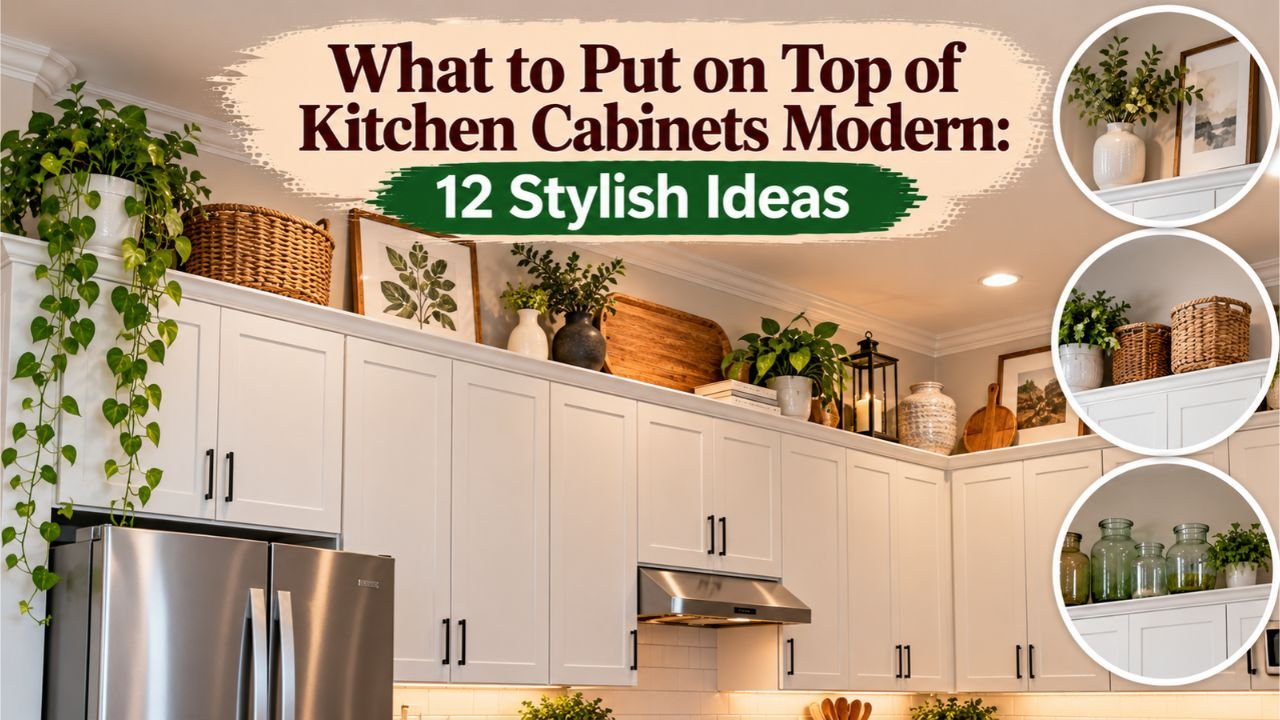
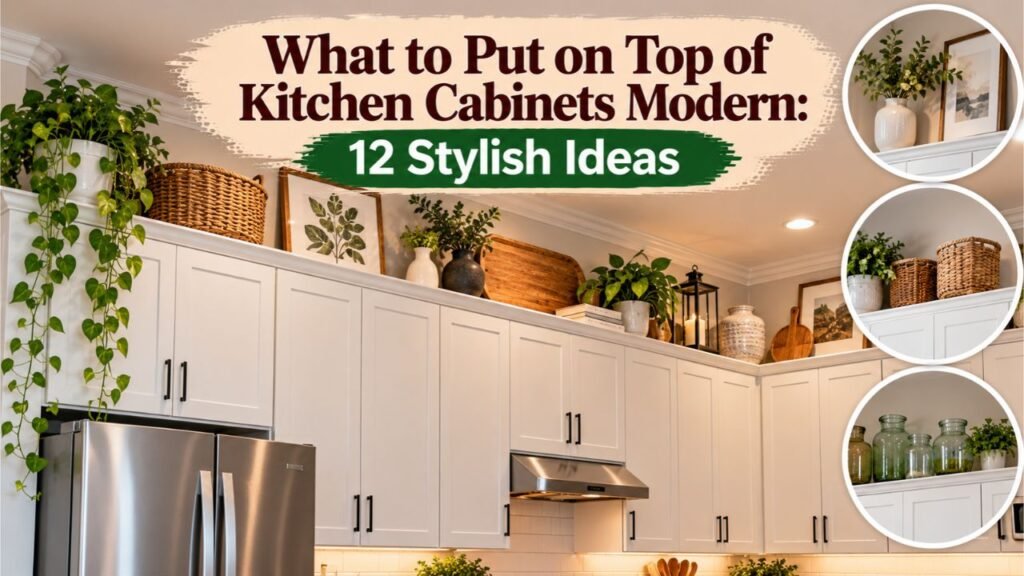
What to Put on Top of Kitchen Cabinets Modern: 12 Stylish Ideas
The best things to put on top of modern kitchen cabinets are oversized ceramic vases, simple framed artwork, decorative bowls, matching baskets, and carefully placed greenery. These items add character without making the kitchen appear crowded. For a particularly clean, minimalist design, leaving the space empty can also be an attractive choice.
The gap between upper kitchen cabinets and the ceiling often creates a decorating challenge. Small objects can look insignificant from below, while too many decorations make the area appear cluttered. Dust, cooking grease, and limited accessibility also influence what belongs there.
Modern kitchens increasingly favor restrained styling. According to the National Kitchen & Bath Association’s 2027 Kitchen Trends Report, 86% of surveyed industry professionals agreed that kitchen layouts are becoming simpler, with less visual clutter.
In this article, I cover 12 modern decorating ideas for the space above kitchen cabinets, including vases, artwork, greenery, baskets, and lighting. You’ll learn how to select decorations for different ceiling heights, coordinate colors and materials, arrange objects without clutter, and keep the area clean and safe.
Read More: how to decorate top of kitchen cabinets
What to Put on Top of Kitchen Cabinets Modern: 12 Decor Ideas
A modern kitchen looks best when the decorations feel intentional rather than randomly collected.
The right objects should complement the cabinetry, countertops, backsplash, and surrounding finishes.
Instead of filling the entire cabinet top, choose a few pieces with simple shapes, complementary colors, and enough height to be seen from below.
Here are 12 practical decorating ideas.
1. Display Oversized Ceramic Vases
Large ceramic vases are among the easiest decorations to use above modern kitchen cabinets.
Their simple shapes create visual interest without requiring multiple accessories.
Choose vases with clean lines and minimal detailing.
Suitable finishes include:
- Matte white
- Warm beige
- Soft gray
- Terracotta
- Charcoal black
- Muted sage green
For a modern appearance, combine two or three lightweight vases of different heights within the same color family.
For example, a tall matte-white vase beside a shorter sand-colored vase creates subtle contrast.
Avoid arranging a long row of identical small vases across the entire cabinet.
A few larger objects generally create a stronger visual effect.
Best for: Modern minimalist kitchens, white cabinets, and contemporary neutral interiors.
Styling Tip: Choose lightweight decorative ceramics where possible. Heavy pottery placed high above a working area can create unnecessary safety risks.
2. Add a Simple Framed Art Print
Artwork can make the empty space above upper cabinets feel like an intentional part of the kitchen design.
A single framed print works particularly well when there is enough wall space between the cabinet top and ceiling.
Choose artwork that matches the surrounding interior.
Good options include:
- Abstract geometric designs
- Minimalist line drawings
- Black-and-white photography
- Muted botanical prints
- Neutral architectural illustrations
For a clean appearance, use a simple black, white, or natural-wood frame.
Avoid combining several unrelated pictures in a small area.
If the frame rests on the cabinet, position it securely so it cannot slide or fall. Wall mounting with appropriate hardware is often safer than loosely leaning a large frame.
Do not place vulnerable artwork directly above a stove or in an area exposed to heavy cooking grease.
Best for: Modern kitchens with a generous gap above the cabinets.
3. Decorate With a Minimalist Sculptural Bowl
A large decorative bowl can add a modern architectural element without introducing excessive detail.
Choose a bowl with a simple, sculptural shape.
Shallow oval bowls, asymmetrical designs, and textured stone-look finishes work particularly well.
Materials may include:
- Lightweight composite
- Ceramic
- Wood
- Resin
- Metal
A single oversized bowl can look more intentional than several small decorations.
However, consider how the bowl will appear from below.
A shallow object placed far back on the cabinet may disappear from view.
Position it where its shape is visible without placing it dangerously close to the cabinet edge.
Best for: Contemporary kitchens with wide cabinet tops and open ceiling space.
4. Arrange Matching Woven Baskets
Woven baskets add warmth and texture to modern kitchens.
They are particularly useful when the space feels too plain or contains many hard surfaces.
For example, natural woven baskets can soften white cabinets, quartz countertops, and stainless-steel appliances.
Choose baskets with simple shapes rather than elaborate decorative patterns.
Popular materials include seagrass, rattan, and other suitable woven fibers.
A coordinated arrangement might include:
- Two medium-sized baskets
- One slightly taller basket
- Similar colors and textures
- Enough separation to keep the display uncluttered
Baskets can also provide storage for lightweight items that are rarely needed.
However, avoid placing heavy objects inside them or overloading cabinet tops.
The Architectural Digest guide to awkward spaces identifies the area above kitchen cabinets as a suitable place for selected decorative pieces, including ceramics, plants, and artwork.
Best for: Warm modern kitchens, Scandinavian-inspired interiors, and natural wood cabinetry.
5. Add Greenery With Trailing Plants
Greenery introduces color and softens the straight lines of modern cabinets.
A single trailing plant can make the space feel less rigid.
Depending on lighting and maintenance needs, options may include:
- Pothos
- Heartleaf philodendron
- Certain trailing peperomia varieties
- High-quality artificial greenery
Live plants need suitable light, water, and growing conditions.
Many cabinet-top spaces receive limited natural light, making them unsuitable for plants that require strong sunlight.
Choose a plant only when the location supports its needs.
Also consider access for watering and pruning.
Use a waterproof saucer or container to prevent water from damaging the cabinets.
Some popular trailing houseplants are toxic to pets if chewed, so choose plant species with household safety in mind.
For a low-maintenance alternative, realistic artificial greenery can provide the same visual softness.
Best for: Modern organic interiors and kitchens that need a small amount of natural color.
6. Use Tall Decorative Branches
Tall branches arranged in a simple vase can fill a substantial vertical gap.
They work particularly well when the cabinets end far below the ceiling.
Choose a restrained arrangement rather than a large, dense bouquet.
Possible options include:
- Artificial olive branches
- Minimal eucalyptus-style stems
- Dried branches
- Simple leafless sculptural twigs
A single tall arrangement can provide an attractive focal point.
For example, place a lightweight cream-colored vase with a few artificial olive branches at one end of the cabinet run.
Keep the other sections relatively open.
This creates a balanced design without repeating plants everywhere.
Make sure the arrangement is stable and cannot contact ceiling fixtures or ventilation equipment.
Avoid brittle dried material near cooking heat or open flames.
Best for: Kitchens with tall ceilings and large empty spaces above upper cabinets.
7. Display Decorative Wooden Trays or Boards
Natural wood introduces warmth into kitchens dominated by painted cabinets, metal hardware, and stone surfaces.
A large wooden tray or decorative board can work as a visual accent.
Choose a simple design with minimal ornamentation.
Light oak, walnut, and other natural finishes suit many modern kitchens.
For example, a warm walnut tray can complement white cabinetry and black hardware.
A tall, decorative wood board may also create an attractive vertical shape when securely positioned.
However, kitchen cabinet tops collect dust and cooking residue.
If a board is used as decoration, clean it thoroughly before using it for food preparation.
Avoid placing wooden pieces immediately above high-heat cooking areas.
Best for: White kitchens, modern farmhouse interiors, and kitchens with wood accents.
8. Arrange Coordinated Stoneware Pitchers
Stoneware pitchers, jars, and decorative vessels provide a simple way to introduce different heights and shapes.
They can look attractive without requiring colorful decorations.
For a modern appearance, choose pieces with similar finishes.
For example:
- One tall cream pitcher
- One medium gray vessel
- One short beige jar
The pieces should share a common color palette or material.
Avoid arranging every pitcher, jug, and container you own across the cabinets.
Select only the pieces that contribute to the overall design.
If the cabinet run is long, one coordinated group at an end may look better than a continuous display.
Best for: Transitional modern kitchens and interiors with neutral stone or tile.
9. Install Subtle LED Uplighting
LED uplighting can make the gap above kitchen cabinets feel like an architectural feature rather than an unused shelf.
Instead of adding physical decorations, a concealed light source illuminates the wall or ceiling above the cabinets.
This creates a soft glow that can make the room feel warmer.
For a contemporary look, consider:
- Warm-white lighting
- Diffused LED strips
- Concealed light channels
- Dimmable lighting
- Simple, continuous illumination
Avoid overly bright or visibly exposed light strips.
The goal is to create a gentle background effect.
Lighting products must be suitable for their installation location, and wiring must follow applicable electrical requirements.
Keep fixtures and wiring away from excessive heat, moisture, and areas where the manufacturer prohibits installation.
The NKBA’s 2027 Kitchen Trends Report also identifies layered lighting as an important direction in kitchen design, with 84% of surveyed professionals expecting multiple lighting layers to become popular.
Best for: Minimalist kitchens, modern apartments, and spaces with narrow cabinet-to-ceiling gaps.
10. Add a Single Modern Metal Sculpture
Metal sculptures can complement modern cabinet hardware and appliances.
Choose an object with a simple silhouette rather than an intricate decorative design.
Suitable finishes include:
- Matte black
- Brushed brass
- Satin stainless steel
- Bronze
- Muted metallic finishes
A lightweight geometric sculpture can create a focal point above a cabinet section.
For example, a simple black circular sculpture may work well against a white wall.
Avoid combining too many metallic finishes without a clear design connection.
A good approach is to repeat one metal already present in the kitchen, such as the cabinet handles or faucet finish.
Best for: Contemporary black-and-white kitchens and modern interiors with metal accents.
11. Use Matching Decorative Storage Boxes
When the space above cabinets needs to provide storage, matching boxes can make the arrangement look organized.
Choose lightweight containers with simple shapes and understated colors.
They can be used for infrequently needed items such as seasonal linens or lightweight table decorations.
Avoid storing frequently used kitchen equipment above cabinets.
Repeatedly reaching high spaces creates inconvenience and increases the risk of dropping objects.
Also avoid storing food in containers that are not suitable for the surrounding heat, moisture, and cleanliness conditions.
For a modern appearance, keep the boxes uniform in color and similar in size.
A row of simple cream or charcoal containers will generally look cleaner than several unrelated packages.
Best for: Small modern kitchens needing occasional additional storage.
12. Leave the Cabinet Tops Empty
One of the most effective modern decorating choices is to leave the space undecorated.
A blank area above cabinets can make the kitchen appear cleaner, taller, and more spacious.
This works particularly well with:
- Flat-panel cabinets
- Handleless cabinet doors
- Neutral wall colors
- Minimalist backsplashes
- Integrated appliances
- Sleek modern lighting
If the cabinet tops already form a clean horizontal line, adding objects may distract from the design.
Consider leaving the space open and allowing the cabinetry itself to remain the focal point.
Best for: Minimalist kitchens, small apartments, and contemporary interiors with simple architectural details.
Key Takeaway: Modern cabinet-top decor works best with fewer, larger objects. Ceramic vases, greenery, and coordinated storage are versatile choices, while an empty cabinet top may create the cleanest appearance.
How to Decorate Above Modern Kitchen Cabinets Without Clutter
The arrangement matters as much as the objects themselves.
Even attractive decorations can look messy when their size, spacing, and colors are not coordinated.
Start With One Focal Point
Choose one main feature for each cabinet section.
It might be a tall vase, framed artwork, or a pair of baskets.
Avoid making every decorative object compete for attention.
A focal point provides visual structure and makes the display easier to understand from across the room.
Use Different Heights Carefully
Combining different heights can create a balanced arrangement.
For example, place a taller vase beside a shorter bowl.
This looks more natural than lining up several items of identical height.
However, don’t mix so many heights that the arrangement becomes visually chaotic.
Three well-chosen pieces often create a stronger effect than a large group of unrelated objects.
Leave Negative Space
Negative space refers to the empty area surrounding decorative objects.
It helps individual pieces stand out.
If a cabinet run is 8 feet long, there is no requirement to fill all 8 feet with decorations.
You might style one end and leave the remaining portion open.
This approach can make the entire arrangement feel more intentional.
Repeat Existing Colors and Materials
Look at the kitchen’s main finishes before selecting decor.
For example:
- Black hardware can be repeated in a small metal sculpture.
- Walnut cabinets can be paired with cream ceramics.
- White countertops can be complemented by pale stoneware.
- Brass fixtures can be echoed through one subtle metallic accent.
Repeating colors and finishes makes the area feel connected to the rest of the room.
Avoid adding multiple unrelated themes above the cabinets.
What to Put Above Kitchen Cabinets Based on Ceiling Height
The available vertical space determines which decorations will look appropriate.
Measure from the top of the cabinet to the ceiling before choosing items.
Small Gap: Approximately 3–6 Inches
A narrow gap usually doesn’t provide enough room for substantial decorations.
Adding several short objects may make the space appear cramped.
Better options include:
- Leaving the gap empty
- Painting the wall to visually blend with the cabinetry
- Using suitable concealed lighting
- Installing carefully designed trim where appropriate
Avoid squeezing baskets or vases into a gap that barely accommodates them.
Medium Gap: Approximately 6–12 Inches
A medium gap allows modest decoration.
Low-profile objects tend to work better.
Consider:
- Short ceramic vases
- Decorative bowls
- Low baskets
- Compact sculptural objects
- Restrained greenery
Keep the arrangement simple.
Avoid using objects that nearly touch the ceiling.
Large Gap: Approximately 12–18 Inches
A larger gap offers more flexibility.
You can introduce taller pieces and varied heights.
For example, combine a medium vase with a taller decorative object.
Framed artwork may also be suitable when it can be mounted securely.
Avoid filling the entire space simply because there is room.
Very Tall Gap: More Than 18 Inches
A tall cabinet-to-ceiling gap can make small objects look insignificant.
Choose larger shapes that remain visible from below.
Suitable options include tall vases, substantial lightweight sculptures, or securely mounted art.
In some kitchens, extending cabinetry or creating an architectural finish may look better than adding more decorations.
These measurements are styling references rather than building standards. Actual placement must account for the available depth, structure, heat sources, ventilation, and fixtures.
Modern Above-Cabinet Decor Based on Cabinet Color
Cabinet color influences how decorations appear against the background.
A contrasting object can become a focal point, while coordinated neutral pieces create a softer effect.
| Cabinet color | Suitable modern decor | Suggested palette |
| White | Ceramic vases, wood accents, greenery | Beige, black, natural wood |
| Black | Cream stoneware, light baskets, metal accents | White, cream, brass |
| Gray | Sculptural bowls, plants, warm wood | Ivory, sage, walnut |
| Natural oak | Matte ceramics, restrained greenery | Warm white, charcoal, olive |
| Walnut | Cream vases, simple art, light stoneware | Beige, off-white, brushed brass |
| Navy blue | Light ceramics, wood, subtle metal | White, tan, brass |
| Sage green | Neutral pottery, natural baskets | Cream, sand, light wood |
What to Put on Top of White Kitchen Cabinets
White cabinets work well with restrained contrast.
Matte black sculptures, natural woven baskets, and warm wood objects can prevent the space from feeling overly plain.
For a softer look, choose cream or beige ceramics.
Greenery can also introduce a small amount of color without overpowering the kitchen.
What to Put on Top of Dark Kitchen Cabinets
Dark cabinetry generally benefits from lighter decorations.
Choose cream-colored vases, natural woven baskets, or pale wood accents.
These pieces create contrast and remain visible against the darker background.
Avoid using too many dark objects against dark walls, particularly when the cabinet gap receives little light.
What to Put on Top of Wood Kitchen Cabinets
Wood cabinets already introduce warmth and texture.
Choose simple ceramic or metal pieces that complement the grain.
For example, a pair of matte-white vases can look attractive above walnut cabinetry.
Avoid filling the space with numerous different wood tones unless they are intentionally coordinated.
Should You Decorate Above Kitchen Cabinets or Leave Them Empty?
Both approaches can work.
The better choice depends on the size of the gap, the cabinet design, and how visually busy the kitchen already feels.
When Decorating Makes Sense
Decorating can improve the appearance when:
- The gap is large and visually empty.
- The kitchen lacks decorative wall space.
- The cabinets have simple finishes.
- A small number of objects can create balance.
- Extra lightweight storage is useful.
- The objects can be cleaned and accessed safely.
For example, a kitchen with plain white cabinets and tall ceilings may benefit from a pair of oversized vases.
When Leaving the Space Empty Looks Better
Leaving the space open may be preferable when:
- The gap is very narrow.
- The kitchen already contains several visual features.
- The cabinets have a strong architectural design.
- The room is small and feels crowded.
- Dust and grease make maintenance difficult.
- Additional items would interfere with fixtures or ventilation.
The decision should support the overall kitchen rather than follow a decorating rule.
Is Decorating Above Kitchen Cabinets Outdated?
No. Decorating the space above kitchen cabinets is not inherently outdated.
The difference is how the area is styled.
Older decorative approaches sometimes used numerous themed signs, artificial greenery, and small collectibles arranged across every cabinet.
Modern designs usually favor simpler objects, larger shapes, and more open space.
The Spruce’s designer-approved guide to decorating above kitchen cabinets includes examples using baskets, plants, artwork, and coordinated decorative objects while allowing some areas to remain bare.
The aim is to create a cohesive design rather than fill every available surface.
How to Style the Top of Kitchen Cabinets Step by Step
A simple decorating process can help you avoid buying unnecessary items.
Step 1: Measure the Available Space
Measure the height, width, and depth of the area above the cabinets.
Note the locations of range hoods, vents, ceiling lights, and other obstacles.
Decide which sections are suitable for decoration.
Step 2: Choose a Modern Design Style
Select a clear direction before purchasing items.
Possible approaches include:
- Minimalist modern
- Warm contemporary
- Scandinavian-inspired
- Modern organic
- Mid-century modern
Use the existing kitchen finishes as a starting point.
Avoid mixing multiple decorating themes without a consistent color or material connection.
Step 3: Select a Limited Color Palette
Choose approximately two or three complementary colors.
For example:
- Cream
- Matte black
- Natural wood
These colors can create a cohesive arrangement above white cabinets.
For a warmer kitchen, use beige, muted green, and walnut tones.
Step 4: Choose One Main Decorative Object
Begin with a single statement piece.
This might be an oversized vase, a framed print, or a sculptural bowl.
Place it where it balances the overall cabinet run.
Avoid placing large objects directly at the edge.
Step 5: Add One or Two Supporting Pieces
Choose smaller objects that complement the focal point.
Vary the heights and shapes slightly.
For example, a tall ceramic vase may be paired with a lower wooden bowl.
Leave enough space around the arrangement.
Step 6: Check the View From the Room
Stand near the kitchen entrance or main living area.
Look at the entire display.
Consider whether the objects appear balanced and whether any area feels crowded.
Remove unnecessary pieces rather than continuing to add more.
Step 7: Check Safety and Accessibility
Make sure every item sits securely.
Avoid heavy objects, loose glassware, and unstable arrangements.
Use appropriate mounting hardware when necessary.
If an object cannot be reached safely for cleaning, reconsider its placement.
What Should You Avoid Putting on Top of Kitchen Cabinets?
Some objects are unsuitable because they create safety concerns, collect excessive grease, or make the area difficult to maintain.
Heavy Glass and Stone Decorations
Large glass containers, heavy stone sculptures, and substantial pottery may present falling hazards.
The top of a cabinet is not automatically designed to support any amount of weight.
Check the cabinet manufacturer’s limitations before using heavy objects.
Keep decorations stable and away from the front edge.
Excessive Small Collectibles
Numerous small objects can create visual clutter.
They also increase the time required for dusting.
For a modern appearance, choose fewer pieces with stronger shapes.
Open Food Containers
Cabinet tops are usually not ideal locations for exposed food.
Dust, cooking grease, and changing temperatures can affect storage conditions.
Use suitable food-storage areas instead.
Frequently Used Appliances
Heavy appliances should not be stored above cabinets simply to clear the countertops.
Retrieving them from high spaces may be difficult or unsafe.
Choose accessible storage for items used regularly.
Candles and Open Flames
Do not place burning candles or other open-flame decorations above cabinets.
High storage areas may contain combustible materials and may be difficult to access quickly.
Use suitable electric lighting if additional illumination is desired.
Objects That Block Ventilation
Keep cabinet-top decorations away from range hood exhausts, ventilation openings, sprinkler heads, and other building systems.
Never obstruct equipment or ignore required manufacturer clearances.
How to Keep Decorations Above Kitchen Cabinets Clean
Dust and airborne grease gradually accumulate on high kitchen surfaces.
The amount depends on cooking habits, ventilation, and the location of the cabinets.
Choose Easy-to-Clean Materials
Smooth decorative items are generally easier to maintain.
Examples include:
- Glazed ceramic
- Smooth metal
- Sealed wood
- Washable decorative containers
- Simple plastic or resin objects
Highly textured baskets, artificial foliage, and intricate sculptures may collect more dust.
Choose these items selectively.
Clean the Cabinet Tops Regularly
Dust the tops periodically using a suitable microfiber cloth or vacuum attachment.
If grease has accumulated, use a cleaner compatible with the cabinet finish.
Avoid soaking wood cabinetry or allowing cleaning liquid to enter joints.
Follow the cabinet manufacturer’s cleaning instructions.
Avoid Grease-Prone Areas
Cabinets near the stove may accumulate more airborne cooking residue.
This makes porous baskets, paper decorations, and fabric items less practical in those locations.
Choose easily washable materials or leave the area undecorated.
Use Safe Access Equipment
Use a stable step stool or ladder appropriate for the height.
Do not stand on kitchen countertops, sinks, or unstable chairs.
Remove objects carefully and clean them at a safe working height.
Return decorations only when they are dry and properly positioned.
Key Takeaway: Easy maintenance should influence your decorating choices. A simple ceramic display that can be wiped clean is usually more practical than a collection of delicate objects that traps dust and grease.
Budget-Friendly Modern Kitchen Cabinet Decorating Ideas
A modern appearance does not require expensive accessories.
The most effective improvements often involve reducing clutter and coordinating existing pieces.
Use Decorations You Already Own
Look for:
- Simple ceramic pitchers
- Attractive serving bowls
- Lightweight wooden trays
- Minimalist frames
- Matching baskets
Choose items that share a similar color or material.
Avoid displaying everything simply because it is available.
Update Existing Decorations
An older decorative item may fit a modern kitchen when surrounded by simpler accessories.
For example, a plain ceramic pitcher can look contemporary beside a sculptural bowl and a clean wall.
Sometimes the arrangement matters more than the item’s age.
Focus on One Area
You do not need to decorate every cabinet section.
Choose the most visible area and create one coordinated display.
Leaving the remaining space open can make the result feel more polished.
Improve the Background Instead
If the cabinet-to-ceiling gap looks unfinished, consider changing the wall color or adding suitable architectural trim.
Painting the area to blend with the cabinets can create a continuous appearance.
For more substantial changes, a cabinet professional can evaluate whether upper extensions, soffits, or other architectural treatments are practical.
Avoid making structural modifications without checking cabinet support and building-system clearances.
Common Mistakes When Decorating Above Modern Kitchen Cabinets
Small styling decisions can significantly affect the final appearance.
| Mistake | Why it looks or works poorly | Better approach |
| Filling every inch | Creates visual clutter | Leave open space between groups |
| Using very small objects | Items disappear when viewed from below | Choose fewer, larger pieces |
| Mixing too many colors | Reduces visual cohesion | Repeat two or three complementary colors |
| Placing heavy objects high up | Creates unnecessary falling risks | Use lightweight, stable decor |
| Ignoring the cabinet gap height | Decorations look cramped or insignificant | Select objects based on available space |
| Using delicate items near the stove | Grease and dust are difficult to remove | Choose washable surfaces |
| Adding too many artificial vines | Can overwhelm clean cabinet lines | Use one restrained greenery accent |
| Blocking vents or fixtures | May interfere with building systems | Keep required clearances open |
| Using high storage for daily items | Makes access inconvenient | Store frequently used items within easy reach |
| Ignoring cleaning needs | Causes dust buildup and difficult maintenance | Choose simple, accessible arrangements |
Why Too Much Decoration Makes Kitchens Look Smaller
Modern kitchens often rely on clean lines and organized surfaces.
When cabinet tops contain numerous unrelated objects, the eye has more details to process.
This can make the room feel busy, especially when the kitchen is already compact.
Reducing the number of decorations can make the space appear calmer.
Why Matching Everything Can Also Look Flat
Although a coordinated color palette is helpful, every decorative object does not need to be identical.
A mix of smooth ceramic, warm wood, and subtle greenery can create texture.
The goal is controlled variation rather than exact repetition.
Why Scale Matters More Than Quantity
Decorations above cabinets are usually viewed from several feet below.
Very small objects can be difficult to see and may resemble clutter.
Larger shapes generally remain more visible.
However, scale must still be balanced against weight, stability, and available clearance.
Conclusion
Deciding what to put on top of kitchen cabinets modern kitchens can accommodate begins with choosing simple decorations that complement the surrounding cabinetry.
Oversized ceramic vases, framed artwork, sculptural bowls, natural baskets, and restrained greenery are versatile options. Concealed LED uplighting can also make an awkward gap feel like part of the kitchen’s design.
The best arrangement depends on the height of the cabinets, the available space, the kitchen’s colors, and how easy the decorations are to maintain.
I recommend starting with one or two lightweight statement pieces rather than filling the entire area. Repeat materials and colors already used in the kitchen, leave enough negative space, and avoid heavy or difficult-to-clean objects.
For minimalist kitchens, leaving cabinet tops empty can be just as effective as decorating them.
A successful modern kitchen display should look balanced, remain safe, and require little maintenance.
FAQs About What to Put on Top of Kitchen Cabinets Modern
What Looks Best on Top of Modern Kitchen Cabinets?
Oversized ceramic vases, simple artwork, decorative bowls, and restrained greenery are among the most versatile options.
Choose pieces with clean shapes and colors that complement the cabinetry.
Avoid overcrowding the space with numerous small items.
Is It Outdated to Decorate Above Kitchen Cabinets?
No. Decorating above kitchen cabinets can still look modern when the arrangement is simple and intentional.
Use fewer, larger objects and leave some areas open.
Avoid crowded displays of unrelated accessories.
Should I Put Plants on Top of Kitchen Cabinets?
Plants can look attractive when the location provides suitable light and access for maintenance.
Use a stable container with protection against water leaks.
If the area lacks adequate natural light, realistic artificial greenery may be more practical.
How Do You Decorate Above Kitchen Cabinets With High Ceilings?
Choose taller, lightweight decorative objects such as ceramic vases, securely mounted art, or restrained branch arrangements.
Small decorations may disappear against a large wall area.
Use a limited number of pieces and leave enough space around them.
What Can I Put Above Kitchen Cabinets With a Small Gap?
For a narrow gap, leaving the area empty may look best.
Other options include suitable concealed lighting, a coordinated wall color, or carefully designed trim.
Avoid squeezing large baskets or decorations into limited space.
Can I Use the Space Above Kitchen Cabinets for Storage?
Yes, when the cabinet structure is suitable for the weight and the items can be accessed safely.
Use lightweight, enclosed containers for infrequently needed items.
Avoid storing heavy appliances, exposed food, or objects that could fall.
What Colors Look Good Above White Kitchen Cabinets?
Matte black, beige, cream, natural wood, sage green, and muted metallic finishes can complement white cabinetry.
Choose a small palette that repeats existing kitchen materials.
This helps the display feel coordinated.
How Do You Keep the Top of Kitchen Cabinets From Looking Cluttered?
Use fewer decorations, select larger shapes, and maintain consistent colors.
Group objects with different heights instead of lining up many small accessories.
Leave sections of the cabinet top empty.
Should Modern Kitchen Cabinets Go All the Way to the Ceiling?
Ceiling-height cabinetry can create a clean built-in appearance and eliminate the dust-collecting gap above upper cabinets.
However, it may increase installation cost and make upper storage harder to reach.
The best option depends on ceiling height, budget, cabinet structure, and the overall kitchen layout.